

A modified vehicle usually needs a little more thought before it’s handed over for transport. Changes such as lowered suspension, wide wheels, lift kits, spoilers, bodywork, custom paint, vinyl wraps, or performance upgrades can all affect how the vehicle needs to be collected and loaded.
Some of those changes are obvious. Others are easy to overlook. A front splitter may sit lower than expected, oversized tires can alter the vehicle’s overall width, and a custom exhaust may leave less clearance underneath. Even small differences can matter when the car is being driven onto a trailer or positioned beside other vehicles.
That doesn’t mean modified vehicles are difficult to ship. It simply means the details need to be discussed before the pick-up. Careful preparation and an experienced auto transport company can make the process straightforward.
This guide covers what to check before booking, how to choose between open and enclosed auto transport, what information to give, and how to prepare the vehicle for pick-up and delivery.
Factory specifications no longer tell the full story once a vehicle has been modified. A lift kit can make a truck too tall for certain trailers, while wide tires, roof accessories, or extra equipment may change the space it needs. Added parts can also increase the vehicle’s weight.
Lowered cars bring their own problems. A front splitter, side skirt, diffuser, or low-hanging exhaust can catch on a ramp if the loading angle is too steep. Custom paint, wraps, and exposed carbon-fiber parts may also need more careful handling.
This is why the carrier needs a full picture before they collect the vehicle. A tuned import will not necessarily be loaded in the same way as a lifted off-roader or a show car with delicate bodywork. Sharing the details early helps the auto transport company plan around the actual vehicle rather than the standard factory model.
Before arranging your auto transport, spend a few minutes looking over the vehicle as it stands now, rather than relying on its original factory details.
Start by making a simple list of anything that’s not factory standard. Include suspension work, larger wheels, wider tires, custom exhausts, roof racks, spoilers, or any other fitted extras.
Don’t rely only on the measurements listed in the owner’s manual. Check the vehicle’s current height, width, length, and ground clearance, particularly if it’s been lowered, lifted, or fitted with wider bodywork. A few photos can also make unusual modifications much easier to explain to the transporter.
Give the vehicle a slow walkaround and photograph what you see. Take wider shots of each side, then add a few close-ups of the wheels, bumpers, paintwork, and any custom parts.
Don’t worry if there are already a few small marks. Just make a note of them, including chips, scratches, dents, or scuffs, so there’s a clear record before collection.
Photograph the interior, note the mileage, and confirm the vehicle is ready to be driven onto the trailer. A flat battery, fluid leak, warning light, or braking problem should be mentioned before the driver arrives.
How the vehicle travels is worth thinking through, especially when custom paintwork, low body parts, or a higher value are involved.
Enclosed auto transport keeps the vehicle inside a trailer for the journey. It won’t be left sitting out in the rain or exposed to dust, grit, and debris thrown up from the road.
The extra cover is often preferred for show cars, luxury vehicles, rare models, and cars with specialist paint, wraps, or delicate bodywork. The price is higher, although many owners feel it’s justified when the finish or custom parts would be costly to put right.
Open transport may be fine when the changes are limited, and the vehicle doesn’t have low-hanging or fragile exterior parts. A car with upgraded wheels or minor engine work, for example, may not need a covered trailer.
It’s normally the less expensive choice, too. Even so, price shouldn’t be the only consideration. Look at the condition and value of the car, then decide how comfortable you are with it traveling on an open carrier.
A little work before pick-up can prevent delays and make the inspection much easier for both you and the auto transport driver.
Wash the exterior so that chips, scratches, and other existing marks are easy to see. A clean surface also makes your pre-transport photographs more useful.
Take out personal belongings, tools, spare parts, and anything else that could move around during the journey. This keeps the weight down and avoids items being lost or broken in transit.
Look closely at anything fitted to the outside of the vehicle. Bike racks, roof boxes, removable antennas, custom mirrors, and similar accessories are usually best taken off.
Spoilers, splitters, and diffusers should be checked for movement. When a part can’t be removed, tell the driver and make sure it’s firmly secured.
Have a look under the vehicle for any fresh drips or patches. Top up the oil, coolant, and brake fluid if needed, and let the transporter know about any leaks before pickup.
The driver will need enough fuel to move the vehicle on and off the trailer. Carrying much more than a quarter tank only adds unnecessary weight.
H3: Switch Off the Alarm
Turn off the alarm before handing over the keys. An alarm sounding inside a trailer can be difficult to deal with and may interrupt the journey.
Don’t assume the vehicle’s make and model will give the carrier all the information needed. Mention lift or lowering kits, suspension work, oversized tires, wide-body panels, carbon-fiber parts, custom paint, and any performance changes that affect how the car starts or drives.
Current measurements matter too. Provide the vehicle’s height, width, length, and ground clearance so the driver can arrive with suitable loading equipment. Leaving out a modification may lead to delays at pick-up or mean the vehicle can’t be loaded as planned.
The sharper the ramp angle, the more likely a lowered car is to catch underneath or at the front. Front bumpers, splitters, side skirts, exhausts, and underbody components are usually the areas most at risk.
Longer ramps, hydraulic lift gates, or other low-angle loading equipment may be needed to create a gentler approach. Sharing the vehicle’s ground clearance measurement in advance gives the driver a better chance of arriving with the right setup and avoiding scraping underneath.
Modified parts can be expensive to replace, so it’s worth checking exactly what protection applies before pick-up.

Request proof of insurance and look at the coverage limit, rather than assuming every part of the vehicle is included. Ask what the policy covers during loading, transporting, and unloading, as well as whether custom paint, bodywork, wheels, or aftermarket parts are treated differently.
Any exclusions should be clear before the vehicle is handed over.
Your personal auto policy may not automatically cover every modification. Check whether upgrades have been declared and whether receipts, photographs, valuations, or other records are required.
Owners of heavily modified, collector, or show vehicles may also want to review any specialist coverage they already hold. Keeping the paperwork together makes it easier to show the vehicle’s value and the cost of its custom parts.
Passport Transport moves custom and modified vehicles across the country, including cars that can’t be treated like a standard factory model. Before anything is booked, the team can talk through the vehicle’s size, ground clearance, bodywork, and fitted extras to help work out the most suitable way to move it.
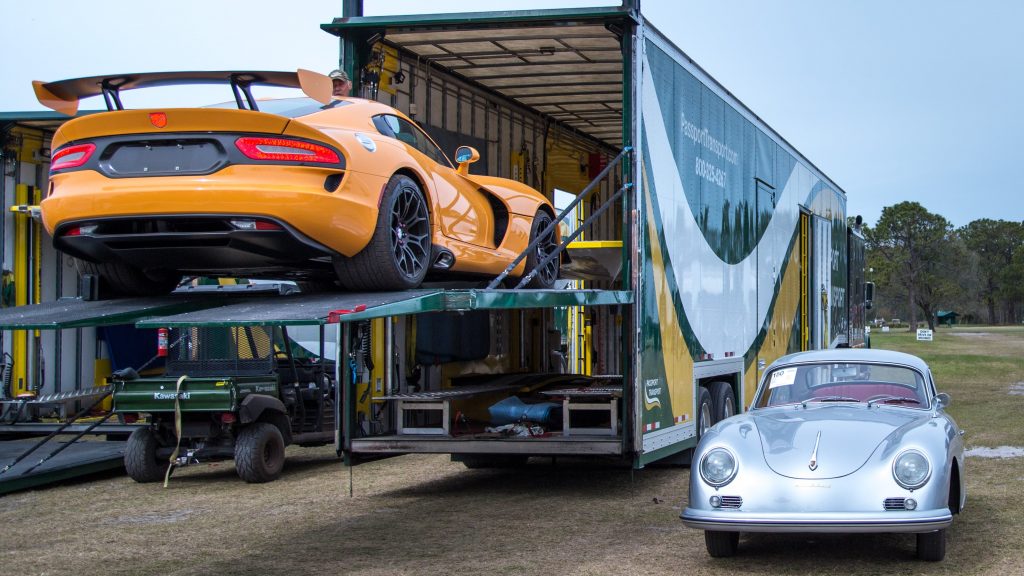
Door-to-door transport is available, and owners receive updates as the shipment moves along. There is also support at both ends of the journey, which can be particularly useful when a vehicle needs careful loading or has unusual features the driver should know about.
Yes. Plenty of modified cars are shipped every day. Problems are more likely when the driver turns up expecting a standard vehicle and finds a lowered car, wider bodywork, or a lift kit that was never mentioned.
Sometimes it’s the obvious choice. A show car with a costly paint finish, a rare collector vehicle, or a build with hard-to-find parts is usually better kept inside a covered trailer. For a car with a few simple upgrades, open transport may be all that’s needed.
Anything that comes off easily should be considered. That could mean an antenna, roof box, rack, detachable splitter, or loose piece of trim. Fixed parts can normally stay in place, but check they’re secure first.
They may do. A lifted truck can be too tall for some trailers, while wide tires may mean the vehicle takes up more room than expected. This is why measurements supplied with the quote need to reflect the car as it is now, not its factory size.
Usually, but not always with a standard ramp. The driver may need longer race ramps, a lift gate, or another way to reduce the angle. Mention low splitters, exhausts, skirts, and underbody parts when booking.
There is no one answer for every policy. Ask about the actual parts fitted to your car and check the coverage limit in writing. Expensive wheels, wraps, paint, and custom bodywork are worth discussing separately.
It’s better not to. A toolbox or loose performance part can move around while the vehicle is on the road, and the carrier may not accept responsibility for belongings left inside.
Aim for at least one to three weeks before the date you have in mind. A more unusual build may need longer, particularly if enclosed auto transport or specialist loading equipment has to be arranged.
Moving a modified or custom vehicle does not need to be stressful, but the details matter. Measuring the vehicle, photographing its condition, securing added parts, and checking the insurance beforehand can prevent many of the problems that arise at pickup.
Most importantly, tell the transporter exactly what has been changed. An experienced auto transport company can then arrange the right trailer, loading setup, and level of protection for the vehicle.
Passport Transport provides nationwide car shipping services for custom, collector, and specialty vehicles. Request a quote to discuss your vehicle and the transport option that suits it best.