
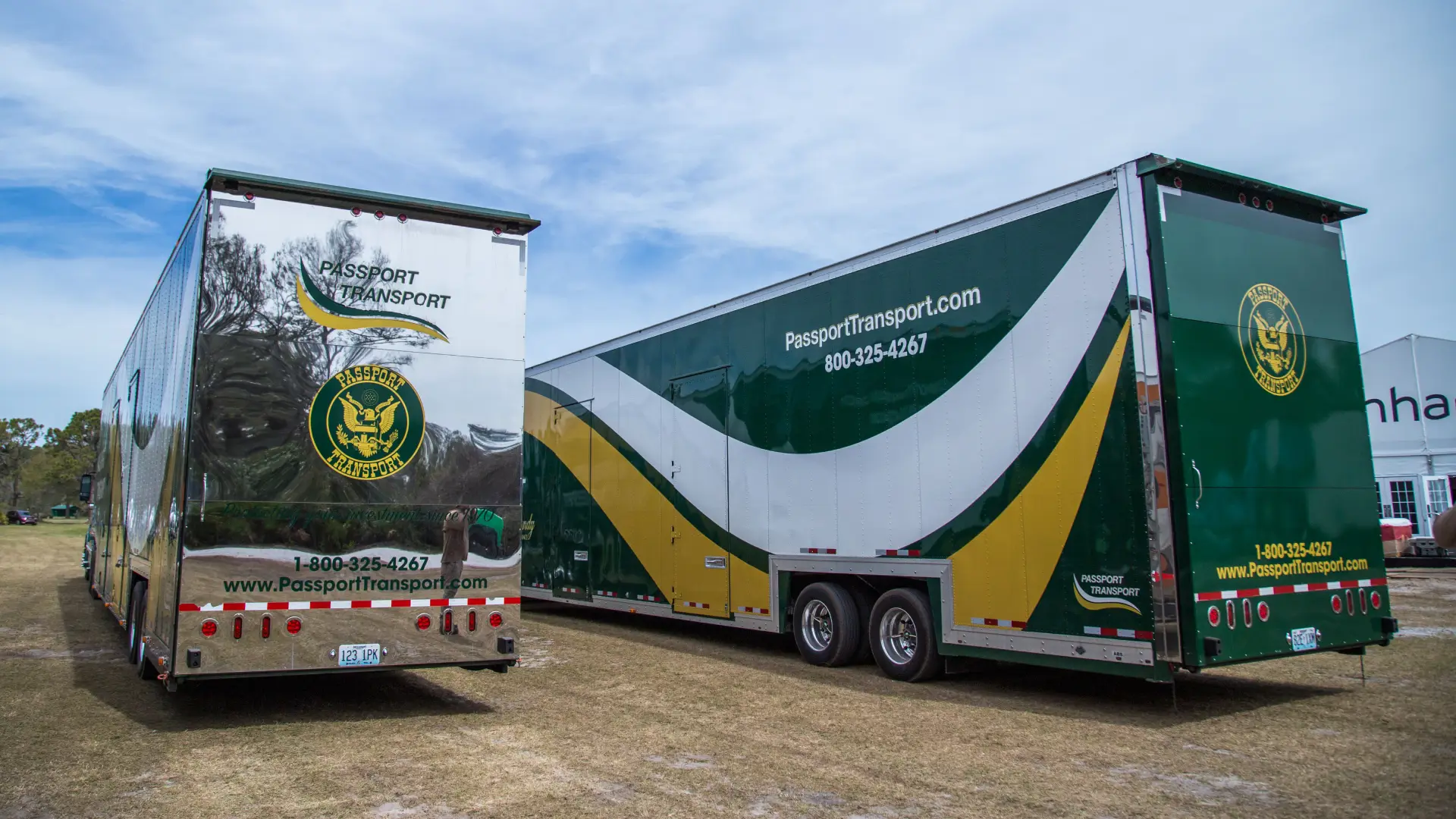
Luxury, classic, and collector cars are not the kind of vehicles most owners want treated like everyday freight. A rare paint finish, low front splitter, delicate trim, or hard-to-replace bodywork can make careful handling just as important as getting the car from A to B.
That’s where enclosed auto transport comes in. Unlike an open trailer, an enclosed one keeps the vehicle inside throughout the journey, helping shield it from rain, road debris, dirt, and unwanted attention along the way.
For owners considering car transport for a valuable vehicle, this guide explains how enclosed shipping works, the protection it provides, how cars are loaded and secured, and what to look for when arranging classic car shipping
With enclosed auto transport, the vehicle is moved inside a trailer with a roof and enclosed sides rather than sitting out in the open for the journey. That extra layer between the car and the road is the main reason owners of valuable vehicles often choose it over standard open shipping.
There is usually less space to fill, too. Enclosed trailers tend to carry fewer cars, making it easier to leave more room around each one during loading and transit.
The equipment used depends on the trailer. Some of them have hydraulic lift gates used to load low-slung cars. Others use longer ramps or other loading setups. Wheel straps and other soft securement methods may also be used instead of attaching equipment directly to sensitive parts of the vehicle.
Because setups vary from one carrier to another, it’s always worth checking exactly how your car will be loaded and secured before pick-up.
Not every car needs an enclosed trailer, but some vehicles are much better suited to the extra care it provides. That includes luxury and exotic models, classic and antique cars, collector vehicles, and anything being prepared for a show or auction.
It can also be a sensible choice for restored or custom-built cars, particularly when the paintwork, trim, or body panels would be difficult or expensive to replace. Low-clearance performance cars are another common fit, since they may need a gentler loading set-up than a standard carrier can provide.
Rare vehicles fall into the same category. If replacement parts are scarce or the car has significant sentimental or collector value, the extra protection offered by enclosed car transport can be well worth considering
With a luxury or classic car, condition can have a huge effect on value. A small chip, scrape, or mark may be little more than an annoyance on an everyday vehicle, but it can matter far more when the car is rare, restored, or highly collectible.
There is also the question of replacement. Older trim, specialist paint finishes, unusual body panels, and original parts aren’t always easy to source. Some cars also sit very low to the ground or have bodywork that needs more care during loading and unloading.
Open transport is perfectly suitable for many vehicles, but it does leave the car exposed throughout the trip. Rain, dust, road grime, insects, bird droppings, and small pieces of airborne debris can all reach the exterior.
An enclosed trailer puts a physical barrier around the vehicle. It also keeps the car out of direct view while the truck is moving or parked, which can be another consideration when transporting something valuable.
Enclosed transport does more than put a roof over the car. The whole setup is generally better suited to vehicles that need a little more care from the moment they’re loaded.
For low-slung cars, getting onto the trailer can be one of the trickiest parts. Depending on the carrier, a hydraulic lift gate or longer loading ramps may be used to avoid a steep approach angle.
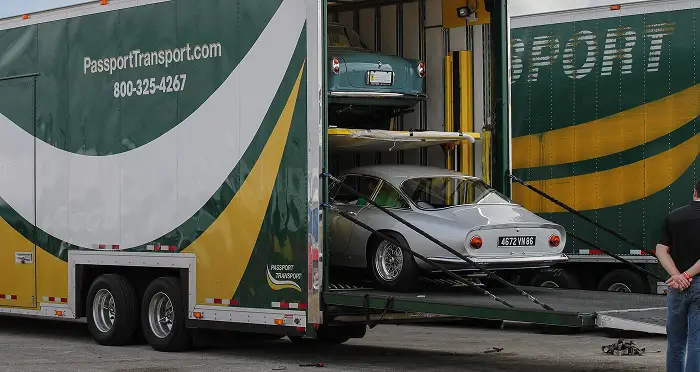
Once the vehicle is loaded inside the trailer, it’s secured so it can’t move around during shipping. Wheel straps or tire-based tie-downs are commonly used because they can hold the vehicle in place without fastening directly to more sensitive areas underneath.
Some enclosed trailers also have air-ride suspension, which helps take some of the harshness out of rougher roads. They usually carry fewer vehicles as well, so there’s often more room around each car and less need to move it once it’s been positioned.
Experience matters too. Drivers accustomed to handling classic, exotic, and high-value vehicles tend to be more familiar with low clearance, unusual bodywork, and the small details that can complicate loading and unloading.
Some cars barely clear the ground, so loading them takes a bit more thought. Using a flatter approach can make a big difference and reduce the chance of catching the bumper, splitter, or underside on the way into the trailer.
How the car is secured matters just as much. Wheel or tire straps keep it steady without fastening directly to the chassis. Done properly, the car stays put during the journey without putting unnecessary strain on more delicate parts.
Before pick-up day, wash the car and have a good look around it. Clean paintwork makes small marks easier to spot, so this is also a good time to take a few clear photos and note any chips or scratches already there.
Have a quick check inside, too. Take out personal items and any loose items, then make sure removable trim or exterior accessories are secure.
The car itself should be ready to move under its own power unless you’ve arranged otherwise. Make sure the battery is fully charged, the tires are properly inflated, and there is around a quarter tank of fuel in the car. If the alarm is likely to cause problems during transport, switch it off.
One last thing: tell the transport company about anything they need to know in advance. A lowered suspension, an unusual starting procedure, oversized tires, or other modifications can affect how the car should be loaded.
When the driver arrives, the car should be accessible and ready to load. Before anything goes onto the trailer, there is usually a walkaround to record the vehicle’s condition. Existing marks are noted on the Bill of Lading or condition report, and photos may be taken as an extra reference.
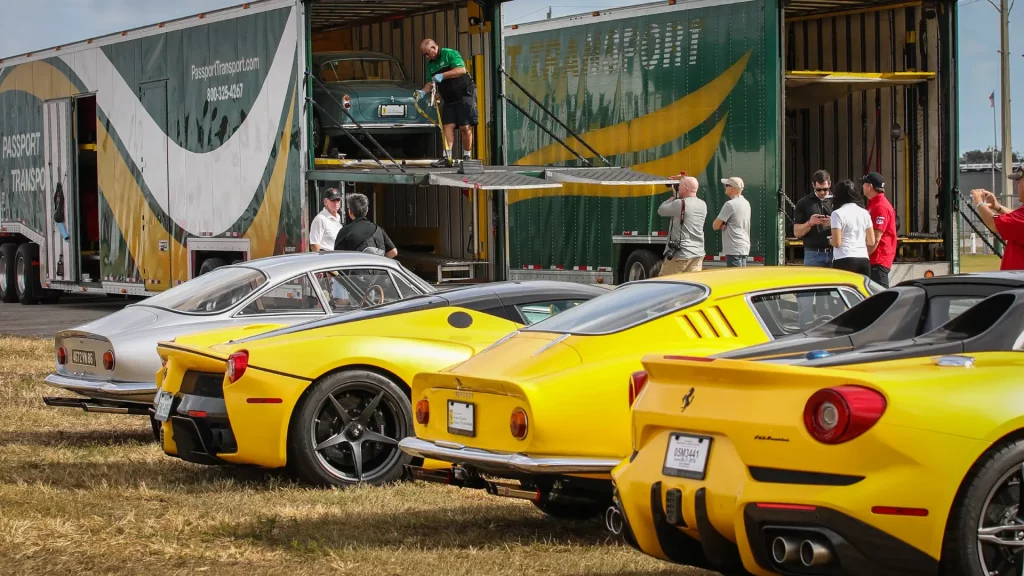
Loading depends on the car and the equipment being used. A low-clearance vehicle may need a lift gate or a shallower ramp angle, while other cars can be driven on normally. Once inside, the vehicle is maneuvered into position and made secure for the trip.
During longer journeys, you should receive updates on progress and expected delivery. When the car arrives, it’s worth taking a few minutes to look it over before signing off.
The pick-up report provides both parties with the same record of how the car looked before transport. At delivery, that original record can be checked again, making the final inspection much more straightforward.
When Paying More for Enclosed Transport Makes Sense
Open transport suits a huge number of vehicles, so there’s no reason to rule it out automatically. The decision usually comes down to how much exposure you’re comfortable with and how important the car’s condition is to you.
| Factor | Open Transport | Enclosed Transport |
| Weather exposure | Exposed | Protected |
| Road debris | Greater exposure | Much lower exposure |
| Vehicle visibility | Visible | Concealed |
| Loading | Standard setup | Specialty equipment may be available |
| Best for | Everyday vehicles | Luxury, classic, exotic, collector cars |
| Cost | Lower | Higher |
One common misconception is that enclosed transport only makes sense for extremely expensive cars. That’s not really the case.
It can also be a good choice for a freshly restored classic, a rare model, a show car, or any vehicle where preserving the finish and overall condition matters more than getting the lowest possible shipping price.
For some owners, the extra cost is less about the car’s market value and more about how difficult it would be to repair, replace, or return it to its current condition.
Price matters, but it shouldn’t be the only thing you compare. If the car is valuable, rare, or difficult to replace, it’s worth finding out who will actually handle it and what equipment they use.
Ask about licensing and insurance, of course, but also about experience. A company that regularly moves classics, exotics, or lowered cars should be able to talk you through the loading process without giving vague answers.
It’s also useful to know how the car will be secured, what gets recorded at pick-up, and how you’ll hear about any changes to the schedule. Pick-up and delivery estimates should sound realistic, not too good to be true.
Moving a valuable car usually starts with getting the details right before the truck arrives. Passport Transport considers the vehicle itself, the route, and any special requirements to arrange the right enclosed setup.
That might mean planning around low ground clearance, unusual dimensions, or a car that needs a little more room during loading. The vehicle is checked at pick-up and again at delivery, with its condition recorded as part of the process.
Passport Transport also provides nationwide door-to-door service, ensuring the car travels from its starting point to the agreed destination with fewer handoffs along the way. Customers are kept updated during transit, including any changes that affect pick-up or delivery timing.
Is enclosed auto transport safer than open transport?
It provides the vehicle with more protection during the journey. Instead of sitting on an open trailer, the car stays inside, away from most rain, road spray, dirt, and flying debris. It is also kept out of direct view while the truck is on the road.
How much more does enclosed car transport cost?
That varies quite a bit. Distance matters, but so do the route, vehicle size, time of year, and the ease of finding space on a suitable enclosed carrier. A very low or oversized car may also cost more if it needs a particular setup.
Can lowered or modified cars be shipped in an enclosed container?
They can, but the transport company needs the details beforehand. Ground clearance, wider tires, custom bodywork, and other changes can affect how the car is loaded. Sharing that information early makes it easier to arrange the right equipment.
Is enclosed transport worth it for classic cars?
Often, yes. With older or collectible cars, keeping the vehicle in its current condition can be especially important. Rare trim, original paint, and hard-to-find parts are not always easy to put right if something gets marked or worn.
Does enclosed auto transport include insurance?
The carrier should have insurance in place, but the limits may vary. Ask what is covered before pick-up and check for any exclusions that could apply to your vehicle.
When a car is rare, recently restored, or worth a great deal to its owner, the journey deserves a bit more thought. Enclosed transport helps keep the vehicle away from the weather and road mess, while the right loading setup and securement methods help protect it inside the trailer, too.
Good car transport is really about matching the service to the vehicle. Passport Transport can arrange enclosed shipping for luxury, classic, and collector cars across the country.
If you are planning a move, request a quote or speak with a specialist about the vehicle, route, and the type of transport that makes the most sense.