

If you’re arranging car shipping in the future, one concern might be whether shipping mileage will affect your car’s odometer. The short answer is no. The number of miles your car travels while on an auto transport trailer makes no difference at all. They won’t be added to your car’s mileage, although you may need to drive a short distance for pick-up, loading, unloading, or delivery.
In this latest post, we explain what happens during the car shipping process, how to record odometer readings, and what to check when your car is delivered. Additionally, we cover handling and inspections, and introduce some simple steps to take before your car is shipped.
How many miles are added to a car during shipping? There’s no quick and simple answer because every shipment is handled differently. However, you can be sure the distance the truck covers doesn’t increase your car’s odometer mileage. The wheels of your car aren’t traveling along the road because they’re fixed to a trailer for the majority of the journey.
Every vehicle has an odometer, and it records the miles the vehicle has covered. Generally, the odometer only registers miles traveled when the wheels are moving and the car is operating. However, because of different vehicle designs and technologies, the exact process varies. Regardless of the process, placing your car on an auto transport trailer won’t add unwanted miles, no matter the length of the journey.
There may be a slight change as the vehicle will need to be driven during pick-up, loading, or delivery, but this will be limited to what is necessary to handle the vehicle.
During the car shipping process, the driver will start and drive the car onto the transport trailer at the pick-up location. When it arrives at the final destination, the same thing happens, only in reverse. During transportation, the driver may also need to reposition the car when other vehicles are collected or delivered.
Access at each location also determines whether the car needs to be driven farther. Auto transport trucks and trailers can be up to 80 feet long, 13.5 feet high, and 8.5 feet wide, which means not all locations can be accessed directly. If the pick-up or delivery location is on a narrow street, within a gated community, in a low-clearance area, or in a busy residential development, you may have to meet the carrier somewhere more suitable nearby.
So, does car transport add mileage? In some cases, handling can add a limited amount. However, this is nowhere near the mileage the car would accumulate if you’d driven it from one location to another.
There are several important stages of the car shipping process. Let’s show you what happens at each stage so you better understand the process and how we document the vehicle’s condition and mileage.
When the carrier arrives to collect your vehicle, you and the driver walk around it and note any scratches, chips, dents, and other damage on the Bill of Lading. Also note the odometer reading. If it’s not, record it by taking a photo.
If the car is running, it’s carefully driven onto the trailer. If it’s a non-runner, a winch will be used. We position it on the trailer based on size, weight, ground clearance, and the other vehicles on board. Once in position, the driver secures it using suitable equipment.
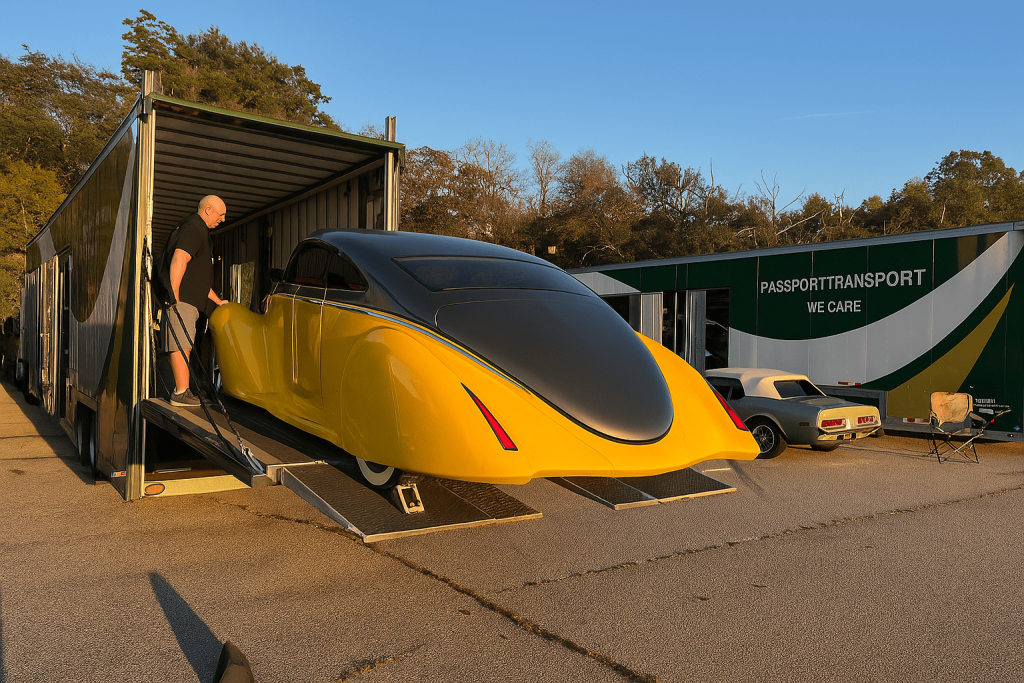
Once loaded, your car stays on the trailer for most of the journey, so no road miles are clocked up on the vehicle’s odometer.
At the agreed destination, your car is driven off the trailer. In some cases, it may have to be a nearby meeting point that’s more accessible. Before signing off on the Bill of Lading to accept delivery, walk around your vehicle and compare its condition and mileage with the original record. If anything is different, make a note on the paperwork and speak to the driver.
When you ship a car, there is no mileage-related wear and tear for the duration of the journey. The engine doesn’t have to be running, the tires are rolling along the highway for hundreds or thousands of miles, and the brakes and other mechanical parts are barely used. Additionally, you are also saving tanks of fuel that the car would have used if you’d driven it over a long distance.
It’s worth noting that there is still an element of risk, although it’s minor. The vehicle must be loaded, secured, and unloaded correctly. When transported using an open trailer, it’s exposed to rain, dust, insects, and road debris. Enclosed transport provides complete protection from outside elements and is recommended for classic, exotic, luxury, or valuable cars.
Keep a record of the odometer mileage during shipping because it allows you to compare at pick-up and delivery. A few photographs and the correct paperwork are all you need.
Take a clear picture of the mileage reading just before the car is collected. A mobile phone camera should be sufficient, as long as the numbers are clear. You can also note the reading on your copy of the Bill of Lading.
Clean your car and then take some photographs of it from several different angles. Make sure the light is good and include images of the bodywork, wheels, windows, and any existing scratches or dents. Make sure these marks are recorded on the inspection report before you sign it.
Before you accept the car, compare the odometer reading and vehicle condition with your photographs, inspection report, and Bill of Lading. If there are any unexpected changes, write them on the delivery paperwork and be sure to raise them with the driver before they leave.
Choose a professional auto transport company rather than driving your car across the country, and you remove almost all of the journey’s mileage. There are a few things you can do to help minimize any additional movement by providing accurate information about the pick-up and delivery locations and agreeing on accessible meeting points.
Make sure your car is running, unless you’ve booked transport for an inoperable vehicle. Advise the car shipping company about low ground clearance, modifications, mechanical problems, and any special handling requirements. Some movement is unavoidable because the car has to be driven onto and off the trailer.
With open transport, vehicles are carried on an uncovered trailer. This method is the most common, economical option. With enclosed transport, vehicles are placed in a covered trailer, which provides complete protection from weather, dust, and debris. It’s a popular choice for people with classic, exotic, luxury, custom, or high-value vehicles.

Both options offer the same when it comes to odometer mileage during shipping. The car is only driven for loading, unloading, and possibly some repositioning, so additional mileage is minimal.
Deciding which type of transport is best for you depends on the level of protection you prefer for your car.
Before you book your car shipping service, ask how your car will be handled and what records will be created. A reputable company will happily explain its procedures.
Useful questions to ask include:
Passport Transport’s specialty is enclosed vehicle shipping for classic, exotic, luxury, race, and other valuable vehicles. All shipments are carefully planned, and the process starts with full vehicle and location details, followed by coordination of the pick-up, journey, and delivery.
Lines of communication are always open. The driver contacts the customer before pick-up to finalize the details. Once the vehicle is loaded, shipments are tracked so you always know where your vehicle is during the journey.
Drivers complete an inspection report and take photographs at pick-up and again at the destination. This ensures there is a clear record of the car’s condition at both ends of the journey. If your car has any special requirements, low ground clearance, modifications, or mechanical problems, inform Passport Transport when making your booking so suitable equipment and handling can be arranged.
Q: Does car shipping add miles to a car’s odometer?
A: No, car shipping doesn’t add miles to a car’s odometer. A small amount may be recorded when the vehicle is driven for loading, unloading, or repositioning.
Q: How many miles are added when a car is shipped?
A: There isn’t a standard number of miles that might be added because every shipment is different. However, any additional mileage should be limited to driving required to collect, load, unload, and deliver the vehicle.
Q: Is a car driven during auto transport?
A: A car is usually only driven onto and off the trailer.
Q: Can I request that my car is not driven during shipping?
A: You can discuss this with the transport company, but some movement may be necessary.
Q: What should I do if my car has unexpected mileage after delivery?
A: If your car has unexpected mileage when it’s delivered, take a photo of the odometer and note the difference on the delivery paperwork. You should also contact the transport provider immediately.
Any miles covered by your car shipping carrier aren’t added to your vehicle’s odometer. Although limited movement occurs during loading, unloading, or delivery, it is nothing like putting hundreds or thousands of road miles on the car itself.
Record the mileage and condition at pick-up with photographs and notes on the Bill of Lading, then check again before signing to accept delivery.